

Most technology announcements are incremental. A new feature ships, a patch lands, a startup raises funding, and the news cycle moves on.
What matters more are the developments that change how software gets built, deployed, or secured. Those signals often look small at first, but they reveal structural shifts beneath the surface of the technology ecosystem.
This week, several signals pointed in the same direction.
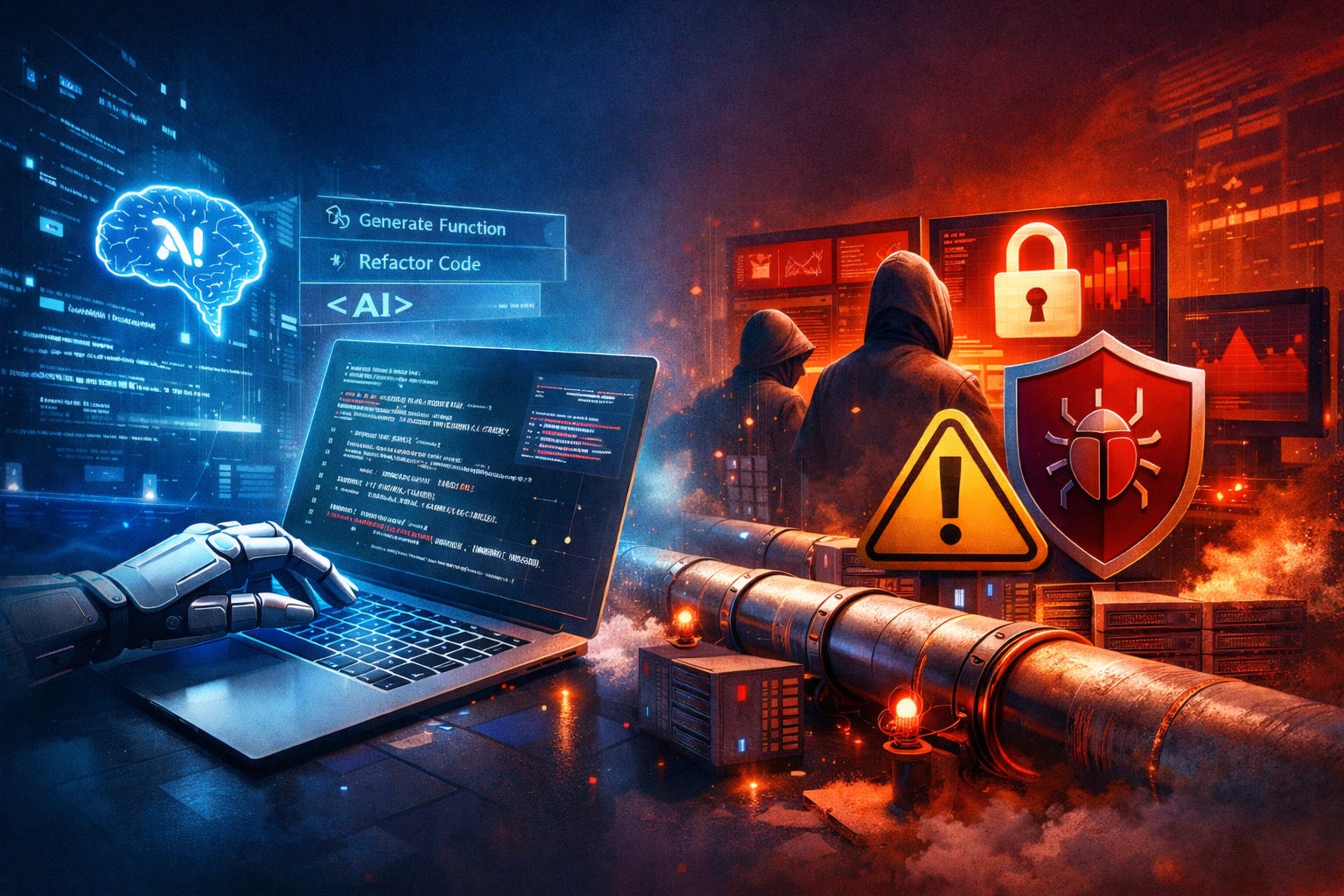
AI coding tools are rapidly becoming the default interface for software development. Enterprise AI adoption is beginning to generate its own governance and monitoring infrastructure.
Developer pipelines are emerging as a new security battleground. And parts of the cybersecurity industry are starting to reconsider cloud-only architectures for sensitive environments.
At the same time, browser platforms are accelerating their release cadence, AI platforms are evolving toward multi-model ecosystems, and infrastructure constraints such as energy availability are beginning to shape the economics of AI computing.
Core Ecosystem Signals
1. AI Coding Tools Are Becoming the Default Development Interface
A recent developer survey of nearly 1,000 engineers found that 95% now use AI coding tools weekly, with Claude Code emerging as the most widely used tool among respondents.
That statistic alone reveals how quickly developer workflows are changing.
Only two years ago, AI coding assistants were experimental tools used primarily for autocomplete suggestions and small snippets. Today, they are rapidly becoming the primary interface for interacting with codebases.
Developers are increasingly writing prompts instead of boilerplate, asking AI to generate functions, refactor legacy modules, write tests, and explain unfamiliar code paths. In many teams, the first step in addressing a new problem is no longer to open documentation or search Stack Overflow. It is prompting an AI assistant.
The result is a structural shift in how software development happens.
Once AI becomes the default coding interface, the surrounding ecosystem begins to change.
Developer productivity expectations rise
Code review processes evolve
CI/CD pipelines must account for AI-generated changes
Governance and observability become more important
Sources: The Pragmatic Engineer survey summary, weekly roundup citing the survey.
2. JetStream Signals the Emergence of AI Governance Infrastructure
AI security startup JetStream launched this week with $34 million in seed funding to build a platform that provides visibility into enterprise AI usage and behavior.
The company’s goal is to help organizations understand how AI systems interact with data, identities, and internal workflows once deployed in production.
The biggest barrier to enterprise AI adoption is no longer model capability.
It is trust.
Companies experimenting with generative AI quickly discover that they lack tools to answer basic operational questions:
Which AI systems are running?
What data can they access?
What actions have they taken?
Who authorized those actions?
JetStream’s emergence suggests that AI governance may become a dedicated infrastructure category, similar to how cloud monitoring and endpoint security became essential layers of modern IT systems.
For developers and SaaS builders, this signals a growing demand for:
AI observability
access boundaries
auditability
usage tracking
These capabilities may soon become prerequisites for deploying AI in production environments.
Sources: SecurityWeek, JetStream announcement.
3. Developer Infrastructure Is Becoming a Security Battleground
Historically, attackers targeted applications.
Today, they increasingly target the infrastructure used to build and deploy those applications.
CI/CD pipelines, package registries, developer identities, and automation workflows are becoming critical attack surfaces across the software supply chain. A compromised build pipeline can inject malicious code into production releases, while compromised developer credentials can silently modify repositories or deployment configurations.
As development becomes more automated, the infrastructure controlling that automation becomes strategically valuable.
The rise of AI agents interacting with developer tooling could accelerate this shift. Autonomous systems capable of probing workflows, dependencies, and pipeline configurations may dramatically accelerate both security testing and exploitation.
Modern development environments rely heavily on automated pipelines and open-source dependencies. That speed comes with risk: vulnerabilities in developer infrastructure can propagate across entire software ecosystems.
Security priorities are therefore expanding beyond application code to include:
CI/CD pipeline permissions
dependency integrity
developer identity systems
repository access controls
build environment isolation
Source: InfoQ coverage of autonomous exploitation against GitHub Actions workflows.
4. Cylake Bets on Sovereign Cybersecurity Infrastructure
Cybersecurity startup Cylake launched this week with $45 million in seed funding led by Greylock Partners to build an AI-native security infrastructure designed for environments requiring full data sovereignty.
The platform is designed for organizations where cloud-based security systems are not viable due to regulatory, operational, or national security constraints.
For more than a decade, security architecture has steadily shifted toward cloud-delivered control planes.
Cylake suggests that this model may not fit every environment.
In sectors such as government, defense, and highly regulated industries, organizations may increasingly require security infrastructure that operates closer to the systems it protects, rather than relying entirely on centralized cloud services.
This signals the possibility of a more hybrid future:
cloud security for mainstream infrastructure
sovereign or on-premise security for sensitive environments
Sources: Cylake launch announcement, SecurityWeek.
5. Microsoft Expands Copilot With Anthropic Models
Microsoft announced that Anthropic’s Claude models are being integrated into the Copilot ecosystem, allowing Copilot services to operate with both OpenAI and Anthropic models inside the same platform.
The AI ecosystem is moving toward multi-model orchestration rather than single-provider dependence.
The architectural implication is important: future applications may need to support model portability, fallback strategies, and multi-model workflows rather than assuming a single AI provider.
Sources: Microsoft official announcement, Financial Times.
6. Chrome’s Faster Cadence Signals a Higher Operational Tempo
Browser platforms are continuing to accelerate their development cycles, with security updates and platform changes arriving more frequently.
The practical effect is that the web platform increasingly behaves like a continuously updated infrastructure rather than a packaged product.
For frontend teams, this increases the importance of automated browser testing and regression monitoring. Products built on complex JavaScript frameworks or design systems will need stronger testing pipelines to avoid unexpected breakage.
Security is also part of the story. Faster release cycles help reduce the time between vulnerability discovery and user protection, tightening the ecosystem’s overall security posture.
The broader implication is cultural: teams that rely on manual QA processes will find it harder to keep up with a platform that is constantly evolving.
Sources: Chrome Developers, Selenium blog reaction.
7. Meta Delays Its New AI Model “Avocado”
Meta postponed the release of its upcoming AI model, internally known as Avocado, after internal performance benchmarks reportedly fell short of competing frontier models.
The delay highlights a broader trend in the AI race: maintaining leadership at the frontier is becoming increasingly expensive and technically difficult.
Training larger models requires massive compute infrastructure, specialized hardware, and increasingly complex data pipelines.
For developers and startups, this has two implications.
First, the competitive landscape may gradually consolidate around a smaller number of frontier model providers.
Second, innovation opportunities may increasingly move up the stack, toward developer tools, AI orchestration layers, workflow automation, and governance systems built on top of existing models.
In other words, the next wave of opportunity may lie less in building new models and more in building the infrastructure that manages how those models are used.
Source: Reuters.
8. Chinese Tech Hubs Promote Open AI Agents
Chinese technology hubs, including Shenzhen, are providing subsidies and development resources to startups building around OpenClaw, an open-source AI agent framework.
At the same time, national regulators are warning about potential data-security and governance risks associated with autonomous AI systems.
China’s approach illustrates a growing global tension in AI development: encouraging rapid innovation while maintaining strict regulatory oversight. Open agent frameworks may accelerate experimentation, but will likely face increasing scrutiny around security and data control.
Sources: Reuters on local subsidies, Reuters on state warnings.
Hardware & Device Signals
1. Nvidia Expands AI Compute Ecosystem
Nvidia’s investments and infrastructure partnerships signal continued consolidation of AI hardware leadership around GPU ecosystems.
Developers building AI products should expect Nvidia tooling, the CUDA ecosystem, and optimized frameworks to remain dominant in the near term.
Sources: Reuters on Nvidia’s Nebius investment, Reuters on Thinking Machines partnership.
2. Data Center Power Demand Emerging as a Hardware Constraint
AI data centers may face power shortages in the coming years due to the explosive growth in compute demand.
Hardware supply may no longer be the only limiting factor; energy infrastructure will increasingly shape compute pricing and availability.
Sources: Reuters on EIA power-demand forecast, Reuters on data-center electricity demand.
Strategic Insights
1. Speed Is Becoming an Operational Burden
The industry has spent years celebrating faster shipping cycles.
But as the surrounding ecosystem accelerates through faster browser updates, autonomous coding agents, and AI-driven workflows, velocity begins to carry operational risk.
Teams must not only ship quickly but also absorb constant platform change.
The winning teams will not simply be the fastest. They will be the ones who can adapt quickly without losing control of their systems.
2. AI’s Real Enterprise Bottleneck Is Trust
Public discussion around AI still focuses heavily on model intelligence.
In enterprise environments, the more important question is whether organizations can trust these systems to operate inside real workflows.
Trust depends on:
visibility
governance
policy enforcement
audit trails
access boundaries
That is why startups like JetStream are emerging.
They are building the control layer that allows organizations to safely deploy AI at scale.
Developer Ecosystem Watch
1. GitHub Copilot CLI
New CLI features allow developers to extend Copilot workflows and integrate AI assistance directly in terminal environments. Developer AI is moving deeper into command-line workflows.
Sources: GitHub Changelog, Copilot CLI general availability.
2. GitHub Copilot SDK
GitHub announced tools for building applications that programmatically use Copilot agents. Developers can now build entire products on top of AI agents.
Sources: GitHub Blog, GitHub Copilot SDK repository.
3. Azure Copilot Migration Agent
The Azure Copilot Migration Agent automates cloud modernization tasks using AI. AI-assisted DevOps and infrastructure migration are becoming mainstream.
Source: Azure Migrate “What’s New”.
Final Thought
The most important signal this week was not a single launch, funding round, or product update.
It was the direction of the ecosystem itself.
AI tools are rapidly changing how developers write software. Developer infrastructure is becoming a more attractive target for attackers. Enterprises are beginning to build governance layers around AI systems. And parts of the security industry are reconsidering how much infrastructure should remain under direct control.
At the same time, the industry’s technical foundation continues to advance. Browsers update faster, AI platforms evolve toward multi-model architectures, and hardware and energy constraints are beginning to shape the next phase of compute infrastructure.
The common thread across all these signals is complexity.
Software systems are becoming more powerful, more autonomous, and more interconnected. That increases opportunity but also the importance of operational discipline.
The next phase of the developer ecosystem may therefore be defined less by individual tools and more by something deeper:
the ability to build and operate complex systems at speed without losing visibility, control, or resilience.
Teams that master that balance will define the next generation of software platforms.
Originally published at https://www.webdevstory.com on March 16, 2026.